

Germans have a rich tradition of using blessing phrases in daily life. These expressions carry warmth, care, and deep meaning. Whether religious or casual, they connect people in a beautiful way.
Learning how to say “God Bless You” in German opens a new world of culture. It helps you speak more naturally with German speakers. It also shows respect for their language and traditions.
Blessing phrases are used in many situations in Germany. You hear them after a sneeze, during prayers, or as goodbyes. Each phrase has its own tone and purpose.
This guide covers everything you need to know. You will learn the words, their meanings, and when to use them. By the end, you will feel confident using German blessing phrases.

Understanding the Meaning Behind “God Bless You”
“God Bless You” is more than just a polite phrase. It carries a deep wish for someone’s health and happiness. People use it to show care and goodwill toward others.
- It is often said after someone sneezes
- It is used in prayers and religious settings
- It can also be a warm farewell or greeting
The phrase has roots in ancient beliefs. People once thought sneezing could let evil spirits into the body. Saying “God Bless You” was meant to protect the person.
Today, it is used both in religious and everyday contexts. Some people say it out of habit. Others say it with deep spiritual meaning.
How Do You Say “God Bless You” in German?
The most direct translation is “Gott Segne dich.” This means “God bless you” in a personal and direct way. It is used when speaking to one person informally.
- Gott segne dich God bless you
- Gott segne euch God bless you
- Gott segne Sie God bless you
For sneezing, Germans most commonly say “Gesundheit.” This word simply means “health.” It is the most widely used blessing phrase in Germany.
“Gesundheit” is also popular in English-speaking countries. Many people use it without knowing it is German. It is a simple and kind way to wish someone well.

When to Use “Gott Segne Dich” in German?
“Gott Segne dich” is used in specific situations. It sounds more religious and heartfelt than casual phrases. You would not use it in every daily conversation.
Use it when:
- Saying goodbye to a loved one
- Offering a prayer or blessing at a gathering
- Writing a sincere message or letter
- Comforting someone going through hard times
It is not commonly said after a sneeze in Germany. Germans prefer “Gesundheit” for that situation. “Gott Segne dich” carries more emotional and spiritual weight.
This phrase works best in personal and meaningful moments. It shows you truly care about the other person. Use it when you want your words to feel special.
Common Ways to Say “Bless You” in the German Language
There are several ways to express blessings in German. Each one fits a different situation. Here are the most common ones:
- Gesundheit Health
- Gott segne dich God bless you
- Sei gesegnet Be blessed
- Alles Gute All the best
- Gottes Segen God’s blessing
“Gesundheit” is by far the most everyday phrase. It is simple, friendly, and widely understood. Almost every German speaker uses it regularly.
“Alles Gute” is great for birthdays, farewells, or good wishes. It does not have a strictly religious meaning. It is a warm and cheerful expression.
God Bless You” vs “Bless You” in German: What’s the Difference?
In English, “God Bless You” and “Bless You” mean almost the same thing. But in German, the difference is clearer. Each phrase has its own tone and setting.
| English | German | Tone |
| God Bless You | Gott segne dich | Religious, heartfelt |
| Bless You (sneeze) | Gesundheit | Casual, everyday |
| Be Blessed | Sei gesegnet | Gentle, spiritual |
“Gott Segne dich” includes the name of God directly. It feels more devout and sincere. You would use it in a meaningful, personal moment.
“Gesundheit” does not mention God at all. It is completely secular and neutral. Anyone can say it, regardless of their beliefs.
Formal vs Informal German Blessing Expressions
German has formal and informal ways of speaking. This also applies to blessing phrases. Choosing the right form shows respect and social awareness.
Informal expressions:
- Gesundheit
- Gott segne dich
- Sei gesegnet
- Alles Gute
Formal expressions:
- Gott segne Sie
- Gottes Segen sei mit Ihnen (God’s blessing be with you)
- Ich wünsche Ihnen Gottes Segen (I wish you God’s blessing)
Use informal phrases with friends, family, and younger people. Use formal expressions in professional, official, or religious settings. Getting this right makes a big difference in German culture.
German Blessing Phrases Used in Everyday Conversations
Germans use blessing-related phrases quite often in daily life. Some are religious, and some are just polite habits. Here are a few you will hear regularly:
- Gesundheit! Said after a sneeze, always
- Guten Morgen, Gott sei Dank Good morning, thank God
- Auf Wiedersehen und Gottes Segen Goodbye and God’s blessing
- Bleib gesund Stay healthy
- Alles Gute für dich All the best for you
“Bleib Gesund” became very popular during recent years. People started using it more as a caring farewell. It is warm, simple, and easy to say.
These phrases keep conversations kind and connected. They remind people that language carries heart. Even a small phrase can brighten someone’s day.
Modern and Informal Ways Germans Say “Bless You”
Younger Germans often use shorter or more casual expressions. They may skip the traditional religious phrases. Modern language is simpler and more relaxed.
- Gesundheit! Still the number one choice
- Bleib gesund Stay healthy
- Pass auf dich auf Take care of yourself
- Mach’s gut Take care / Do well
- Alles Gute All the best
Social media has also influenced how people share blessings. Short messages like “Alles Gute” are common in texts and comments. They feel friendly without being too formal.
These modern phrases still carry kindness and warmth. They may not mention God directly. But the spirit of blessing is still very much there.

The German Word for “Bless” and Its Deeper Meaning
The German word for “bless” is “Segnen.” It comes from the Latin word signare, meaning “to mark with a sign.” Over time, it took on a deeply spiritual meaning.
- Segnen To bless
- Segen Blessing
- Gesegnet Blessed
- Der Segen Gottes The blessing of God
In Christian tradition, “segnen” is used in prayers and church ceremonies. A priest “segnet” the people during a service. Parents also “Segnen” their children as a form of love and protection.
The word “Segen” also appears in everyday speech. Saying something is “ein wahrer Segen” means it is “a true blessing.” It shows how deeply this word is woven into German life.

Religious German Phrases and Their English Meanings
Germany has a strong Christian history. Many common phrases come from this religious background. Here are some meaningful religious expressions:
| German Phrase | English Meaning |
| Gott sei Dank | Thank God |
| Gott segne dich | God bless you |
| Der Herr sei mit dir | The Lord be with you |
| Gottes Segen | God’s blessing |
| In Gottes Namen | In God’s name |
| Sei gesegnet | Be blessed |
These phrases appear in church services and prayers. They are also used in personal conversations among believers. Many older Germans use them as part of daily speech.
Even non-religious Germans may use these phrases. They have become part of the cultural language. They carry tradition, comfort, and community meaning.
The Role of Faith in German Expressions of Blessing
Faith plays an important role in German culture and language. Germany has a long history of Christianity, both Catholic and Protestant. This history shaped how people express care through words.
- Blessing phrases are common in church communities
- Families often use them during meals and prayers
- They appear in holidays like Christmas and Easter
Martin Luther, the famous German reformer, helped shape the German language. Many religious phrases used today trace back to his Bible translation. His words became part of everyday German speech.
Even as Germany becomes more secular, these phrases remain. People use them as cultural expressions, not just religious ones. They carry centuries of warmth and meaning.
How Blessing Expressions Have Evolved in Modern German?
Language always changes with society. German blessing phrases have evolved too. Some old expressions are fading, while new ones are growing.
Old-fashioned phrases:
- Behüt dich Gott (God protect you)
- Der Herr segne dich (The Lord bless you)
Modern replacements:
- Bleib gesund (Stay healthy)
- Pass auf dich auf (Take care)
- Alles Gute (All the best)
Younger generations often prefer neutral, non-religious phrases. They want to be inclusive and respectful of all beliefs. So they choose words that carry kindness without specific religious meaning.
But traditional phrases have not disappeared completely. They are still used in churches, by older generations, and in sincere moments. Both old and new expressions have their place in German life.
Blessings Across Languages and Cultures
Every culture has its own way of wishing others well. Blessings are a universal human habit. They show care, love, and connection across the world.
- In Arabic, people say “Alhamdulillah” (Praise be to God)
- In Hebrew, “Baruch Hashem” means “Blessed is God”
- In Italian, “Salute” is said after a sneeze, just like “Gesundheit”
- In French, “Dieu vous bénisse” means “God bless you”
Despite different words, the message is the same. People everywhere want to protect and uplift each other. Blessings are the language of the heart.
Learning blessing phrases in other languages is a beautiful gesture. It shows respect for other cultures. And it reminds us how much we all share as human beings.
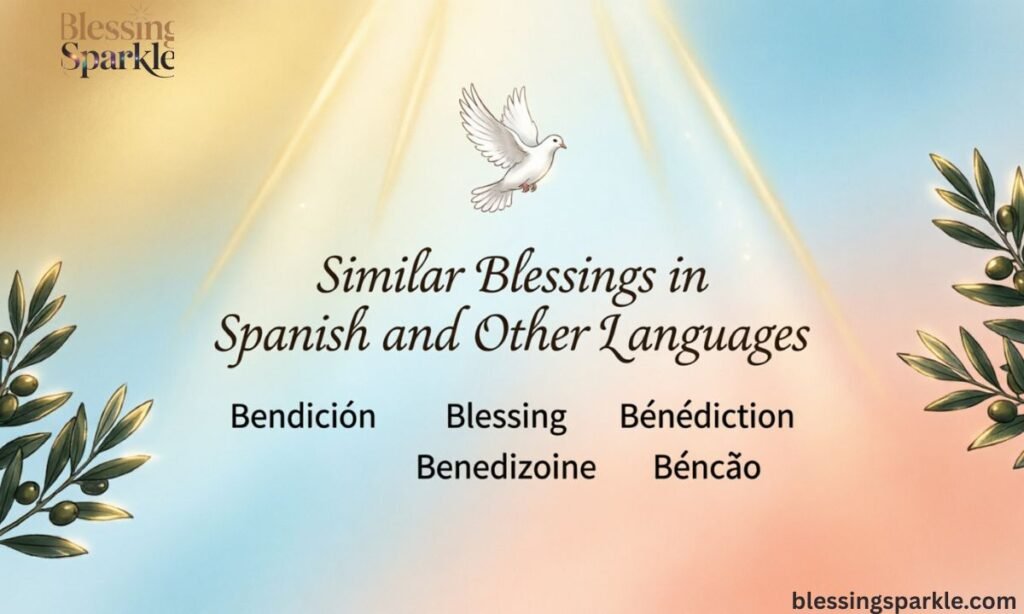
Similar Blessings in Spanish and Other Languages
Spanish has many warm blessing expressions similar to German ones. They share the same spirit of love and care. Here are some popular ones:
- Bendiciones Blessings
- Que Dios te bendiga May God bless you
- Salud Health (said after a sneeze)
- Que estés bien May you be well
In Portuguese, people say “Deus te abençoe” for “God bless you.” In Italian, “Dio ti benedica” carries the same meaning. All these phrases come from similar Latin and Christian roots.
Comparing blessings across languages is fascinating. You start to see how cultures are more alike than different. A kind word in any language touches the heart the same way.
Why Language Matters When Sharing Blessings?
The words you choose carry real power. When you bless someone in their own language, it means more. It shows effort, respect, and genuine care.
- It creates a deeper personal connection
- It shows cultural awareness and sensitivity
- It makes the other person feel seen and valued
Speaking even one phrase in someone’s native language is meaningful. It breaks barriers and builds trust. A simple “Gesundheit” said with a smile can brighten someone’s day.
Language is how we share our hearts with others. Blessing phrases are small but powerful tools. Use them often, and use them with sincerity.

The True Blessings: Celebrating the Spirit of Kind Words
At the end of the day, blessings are about kindness. Whether in German, English, or any other language, they come from the heart. They remind us to care for one another.
- Kind words cost nothing but mean everything
- A blessing shared is a gift freely given
- Language connects us, even across great distances
“Gesundheit,” “Gott segne dich,” or simply “Alles Gute” each phrase is a small act of love. It tells someone: I see you, I care about you, and I wish you well.
The spirit of blessing goes beyond religion or culture. It is a deeply human instinct. And that instinct is one of the most beautiful things about being alive.
Frequently Asked Questions
What is the most common way to say “Bless You” in German after a sneeze?
The most common phrase is “Gesundheit,” which means “health.” It is simple, friendly, and used by almost all German speakers.
Is “Gott Segne dich” used in everyday German conversations?
It is not an everyday phrase. It is more heartfelt and religious. Germans use it in sincere moments, prayers, or meaningful farewells.
What is the difference between “Gesundheit” and “Gott segne dich”?
“Gesundheit” is casual and secular. “Gott segne dich” is spiritual and personal. The first is for sneezes; the second is for deeper blessings.
Can non-religious people use German blessing phrases?
Yes, absolutely. Many phrases like “Alles Gute” and “Bleib Gesund” are not religious at all. Even secular Germans use them freely in daily life.
How do you say “God Bless You” formally in German?
The formal version is “Gott segne Sie.” Use it in professional or respectful settings. It shows both kindness and proper social etiquette.
Conclusion
Learning German blessing phrases is more than a language lesson. It connects you to a rich culture full of warmth and tradition. Even a single phrase can build a meaningful bridge between people.
From “Gesundheit” to “Gott Segne dich,” each expression carries its own beauty. These words reflect care, faith, and the desire to protect others. That spirit is something every person can appreciate and share.